نظرتُ إلى الحياةِ رأيتُ أُمًّا
تُرَبِّي الأرضَ رابيةً وسَهْلَا
وأبصرتُ الدروبَ دروبَ عُمري
متاهً يشبهُ الأمعاءَ شَكْلَا
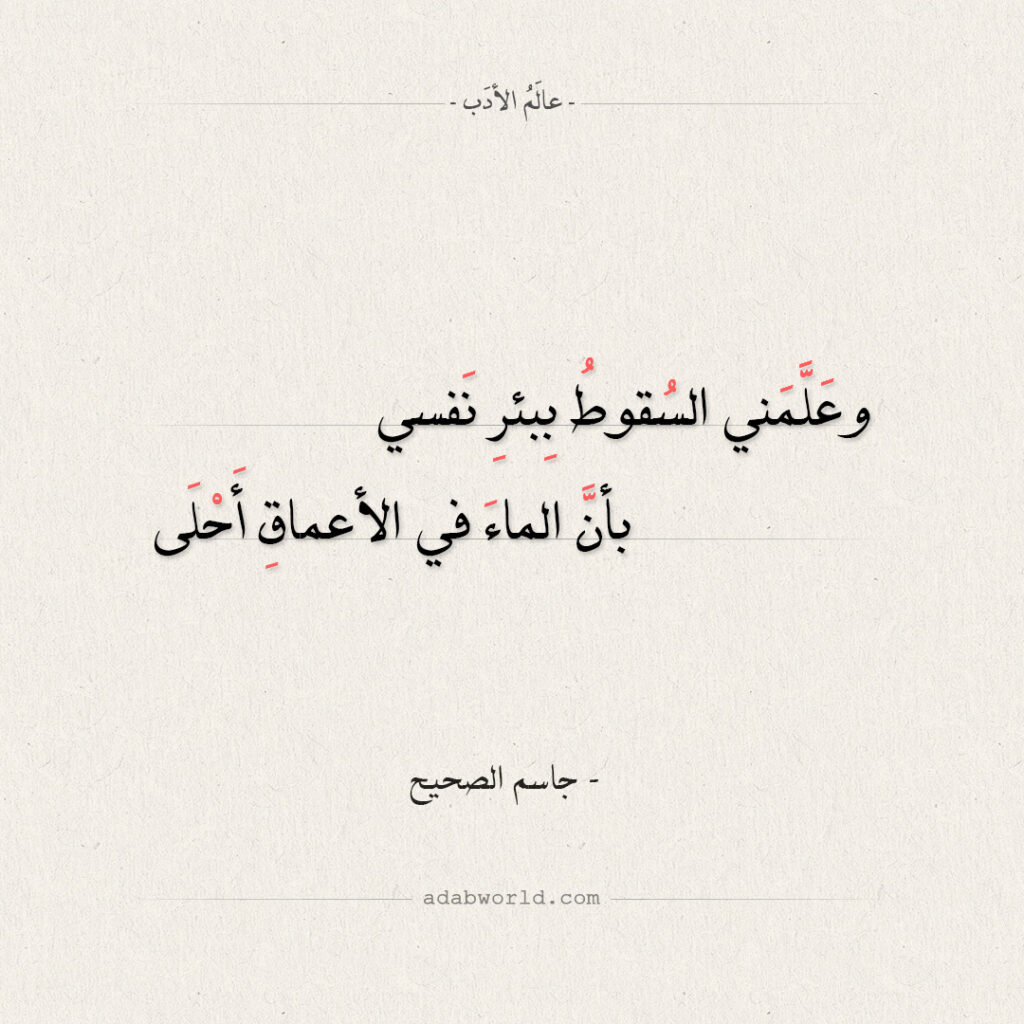
وعَلَّمَني السقوطُ ببئرِ نفسي
بأنَّ الماءَ في الأعماقِ أَحْلَى
وأَورَثَني أبي ما لم أَصُنْهُ
تراثَ الغيمِ ساقيةً وحقلَا
تُؤَوِّلُني حكايةٌ كلِّ ماءٍ
يودُّ الجريَ.. والأنهارُ كَسْلَى!
— جاسم الصحيح
شرح المفردات الصعبة:
- رابية: مرتفعة أو تلة صغيرة.
- متاه: طريق ضائع أو متشعب يشبه المتاهة.
- السقوط ببئر نفسي: استعارة لاكتشاف الذات من خلال الألم والتجربة.
- أورثني أبي: أعطاني إرثًا معنويًا أو ماديًا.
- تراث الغيم: رمز للخير والعطاء غير المحدود.
- تؤوّلني حكاية: تجعلني أشبه قصة أو تصبح حياتي كأنها تفسير لحكاية.
- كسلى: خاملة أو بطيئة الحركة.
شرح الأبيات وتحليلها:
جاسم الصحيح في هذه القصيدة يتأمل الحياة عبر مشاهد رمزية تعكس فلسفته تجاه الوجود والذات.
- البيت الأول: يبدأ بملاحظة الطبيعة، حيث يرى الأم التي تربي الأرض كما تربي طفلها، وكأن الطبيعة تمنح الحياة بشكل مستمر، في دور لا ينتهي.
- البيت الثاني: يشبه دروب الحياة بالأمعاء المتشابكة، إشارة إلى تعقيد المسارات التي يواجهها الإنسان، حيث يصعب إيجاد طريق واضح ومستقيم.
- البيت الثالث: يربط تجربة السقوط في أعماق النفس باكتشاف الجمال الخفي، حيث يشير إلى أن المعرفة العميقة لا تأتي إلا بعد مواجهة الذات، مثلما يكون الماء في الأعماق أكثر عذوبة.
- البيت الرابع والخامس: يتحدث عن الإرث الذي تركه له والده، وهو إرث يشبه الغيم، في دلالته على الخير والخصوبة، لكنه لم يحسن الحفاظ عليه، في إشارة إلى ضياع القيم أو الأحلام.
- البيت الأخير: يعكس التناقض بين الرغبة في الانطلاق والقيود التي تعيقها، حيث يشبّه نفسه بالماء الذي يتوق للجريان، لكنه يجد الأنهار كسلى، وكأن الواقع لا يتماشى مع التطلعات.
القصيدة تمزج بين التأمل الفلسفي والصور الحسية، مما يجعلها لوحة شعرية معبرة عن الصراع بين الأحلام والواقع، وبين الاكتشاف الذاتي وضياع المعنى.
Poem Translation:
I gazed upon the earth and saw a mother fair,
Who shaped the hills and valleys with her care.
And paths before me, winding, lost in maze,
Like twisted veins where endless journeys blaze.
Yet falling deep within my soul’s own well,
I found the waters sweeter where they dwell.
My father left me gifts of cloud and field,
Yet lost they were, unkept, untamed, unsealed.
Like restless streams that long to flow anew,
Yet rivers lie in sloth—too still to strew.
Poem Explanation:
Jassim Al-Sahih’s poem is a meditation on life, inheritance, and self-discovery.
- The poet begins with an image of the earth as a mother, nurturing and shaping the land as a mother shapes a child—suggesting a cyclical and eternal connection between nature and existence.
- He then shifts to a metaphor of life’s paths as tangled intestines, illustrating confusion and complexity in one’s journey.
- The well imagery signifies introspection: only through falling into the depths of the self can one find true wisdom and sweetness, akin to how deep water is often purer.
- His father’s legacy is depicted as clouds and fertile land—symbols of promise and abundance—but the poet acknowledges his failure to preserve this inheritance, suggesting lost opportunities or unfulfilled potential.
- The final lines contrast the yearning of water to move with the inertia of rivers, symbolizing a personal struggle between ambition and external limitations.
This poem carries a deeply philosophical tone, combining vivid imagery with existential reflection, making it both personal and universally resonant.