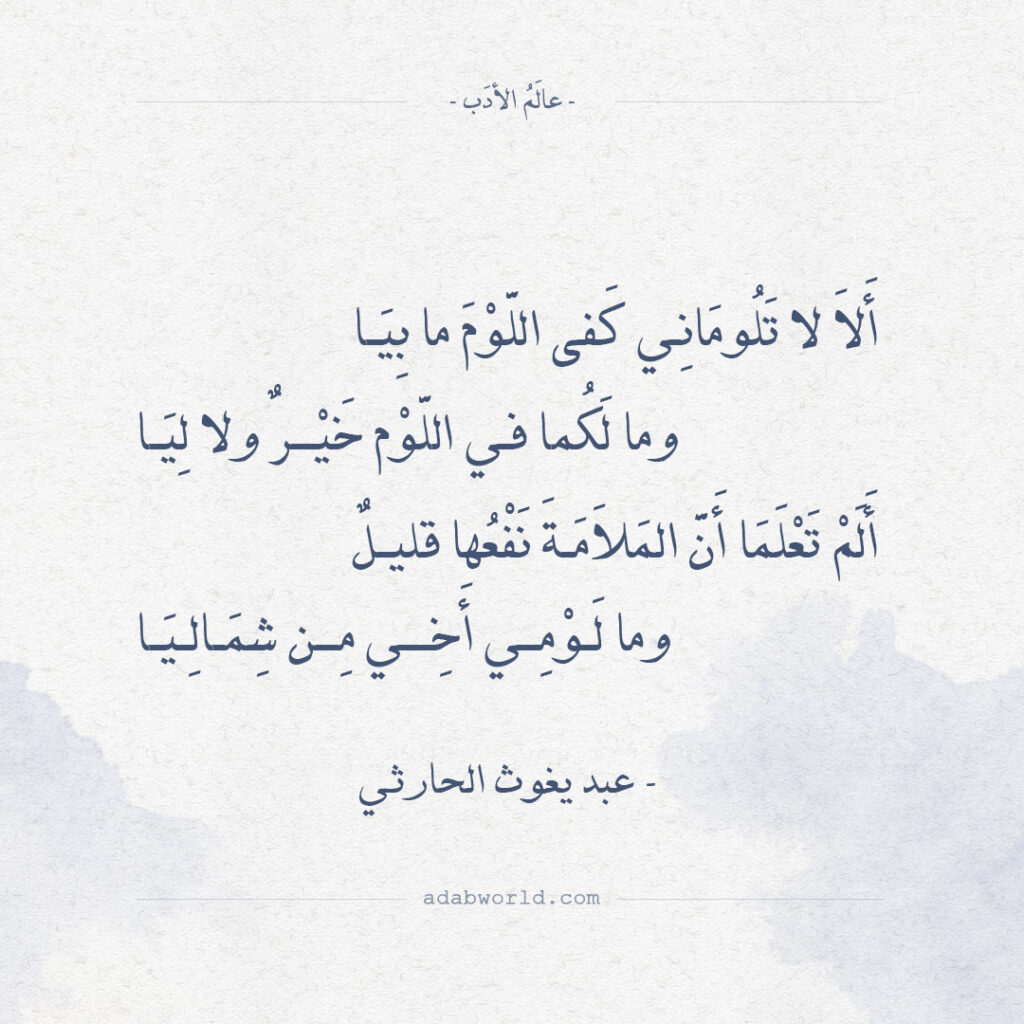
أَلا لا تَلوماني كَفى اللَومَ ما بِيا
وَما لَكُما في اللَومِ خَيرٌ وَلا لِيا
أَلَم تَعلَما أَنَّ المَلامَةَ نَفعُها
قَليل وَما لَومي أَخي مِن شمالِيا
فَيا راكِباً إِمّا عَرَضتَ فَبَلَّغَن
نَدامايَ مِن نَجرانَ أَن لا تَلاقِيا
أَبا كَرِبٍ وَالأَيهَمَينِ كِلَيهِما
وَقَيساً بِأَعلى حَضرَمَوتَ اليَمانِيا
جَزى اللَهُ قَومي بِالكُلابِ مَلامَةً
صَريحَهُم وَالآخَرينَ المَوالِيا
وَلَو شِئتُ نَجَّتني مِنَ الخَيلِ نَهدَةٌ
تَرى خَلفَها الحُوَّ الجِيادَ تَوالِيا
وَلَكِنّني أَحمي ذِمارَ أَبيكُم
وَكانَ الرِماحُ يَختَطِفنَ المُحامِيا
وَتَضحَكُ مِنّي شَيخَةٌ عَبشَمِيَّةٌ
كَأَن لَم تَرى قَبلي أَسيراً يَمانِيا
وَقَد عَلِمَت عَرسي مُلَيكَةُ أَنَّني
أَنا اللَيثُ مَعدُوّاً عَلَيَّ وَعادِيا
أَقولُ وَقَد شَدّوا لِساني بِنِسعَةٍ
أَمَعشَرَ تَيمٍ أَطلِقوا عَن لِسانِيا
أَمَعشَرَ تَيمٍ قَد مَلَكتُم فَأَسجِحوا
فَإِنَّ أَخاكُم لَم يَكُن مِن بَوائِيا
فَإِن تَقتُلوني تَقتُلوا بِيَ سَيِّداً
وَإِن تُطلِقوني تَحرُبوني بِمالِيا
وَكُنتُ إِذا ما الخَيلُ شَمَّصَها القَنا
لبيق بِتَصريفِ القَناة بنَانِيا
فيا عاصِ فكَّ القَيد عنّي فإنني
صَبور على مرِّ الحوادثِ ناكِيا
أَحَقّاً عِبادَ اللَهِ أَن لَستُ سامِعاً
نَشيدَ الرُعاءِ المُعزِبينَ المَتالِيا
وَقَد كُنتُ نَحّارَ الجَزورِ وَمُعمِلَ ال
مطيَّ وأمضي حيث لاحي ماضيا
وَأَنحَرُ لِلشَربِ الكِرامِ مِطِيَّتي
وَأَصدَعُ بَينَ القَينَتَينِ رِدائِيا
وَعادِيَةٍ سَومَ الجَرادِ وَزَعتُها
بِكَفّي وَقَد أَنحَوا إِلَيَّ العَوالِيا
كَأَنِّيَ لَم أَركَب جَواداً وَلَم أَقُل
لِخَيلِيَ كُرّي نَفِّسي عَن رِجالِيا
وَلَم أَسبَإِ الزِقَّ الرَوِيَّ وَلَم أَقُل
لِأَيسارِ صِدقٍ أَعظِموا ضَوءَ نارِيا
– عبد يغوث الحارثي
شرح الأبيات:
وقوله لا تلوماني نهى عاذليه عن لومه يقول ما نزل بي من الهم قد زاد على اللوم فإذا لمتماني بعد وقوع الحادثة لم يجد لومكما نفعا ولم تنفعا به والملامة بعد وقوع المكروه نفعها قليل فلا تلوماني على ترك الحزم والتأهب لوقوع الحادثة فإني لا ألومكما على تخاذلكما وتأخركما عني فليس أخلاقي لوم الإخوان وشمالي أخلاقي وأراد بالأخ الجماعة ويروى أخاً
يقول الجاحظ في البيان والتبيين:
ليس في الأرض أعجب من طرفة بن العبد وعبد يغوث فإن قسنا جودة أشعارهما في وقت إحاطة الموت بهما فلم تكن دون سائر أشعارهما في حال الأمن والرفاهية
Poem Translation:
O blame me not! Enough is mine to bear,
Your censure adds no balm to my despair.
Did you not know how fruitless all reproof?
No brother’s fault lies in my northern roof.
And should you ride, convey to comrades mine—
From Najran’s halls, avoid my ruined line.
Say this to Kays, to noble men I knew,
Who ruled Hadramawt’s peaks in honor true.
My clan, the Kalab tribe, hath earned disgrace,
Both freemen and their bondsmen lose their place.
I could have fled on steeds so swift and bold,
Yet chose to guard your honor, firm and cold.
The spears were flying, yet I held my stand—
For duty’s shield was stronger than my hand.
A woman mocked me—slave from distant land—
As though no noble fell by foe’s command.
Yet Mulaika knows, my bride, and knows it well,
That I’m the lion—born for fight and fell.
They bound my tongue with thong and cruel chain,
Yet still I speak through silence and through pain.
O sons of Taym! If captives now you hold—
Be gracious, for I was no coward cold.
To kill me is to slay a noble name;
To free me—gain my gold, and earn your fame.
When lances broke, and horses shied with fright,
My hand knew well the spear’s commanding flight.
So loosen now this chain—I do not fear
The bitter days, nor wounds, nor prison near.
Shall I not hear again the herder’s song,
That once would echo where I rode along?
Was I not host who slaughtered camels grand,
Whose cloak was torn by dancing maiden’s hand?
Did I not break the locust storm with might,
And turn their blades before they struck in fight?
Have I not ridden proud through smoke and flame,
And bid my horse to charge in honor’s name?
Did I not drink from noble flasks of old,
And bid the fires of loyalty burn bold?
Poem Explanation:
This poem is a noble protest by a once-mighty warrior who now finds himself a prisoner. He rebukes those who scold him, insisting he suffers enough. He calls out to his old allies and reflects bitterly on the shame his tribe has brought him. Despite his ability to escape, he chose to protect his people’s honor. He mocks those who ridicule him in captivity, reminding them of his glorious past. The poet shifts between grief, pride, sarcasm, and bitterness, ultimately affirming his unbroken spirit even in defeat. It is a powerful declaration of dignity in the face of dishonor.